TL;DR: While closing windows is a good first step, wildfire smoke can still infiltrate up to 80% of your indoor space through hidden gaps and standard filters. Professional building science consulting uses advanced filtration and pressure management to reduce that infiltration to less than 5%, keeping your air truly clean.
Why shouldn’t you just close the windows during wildfire season?
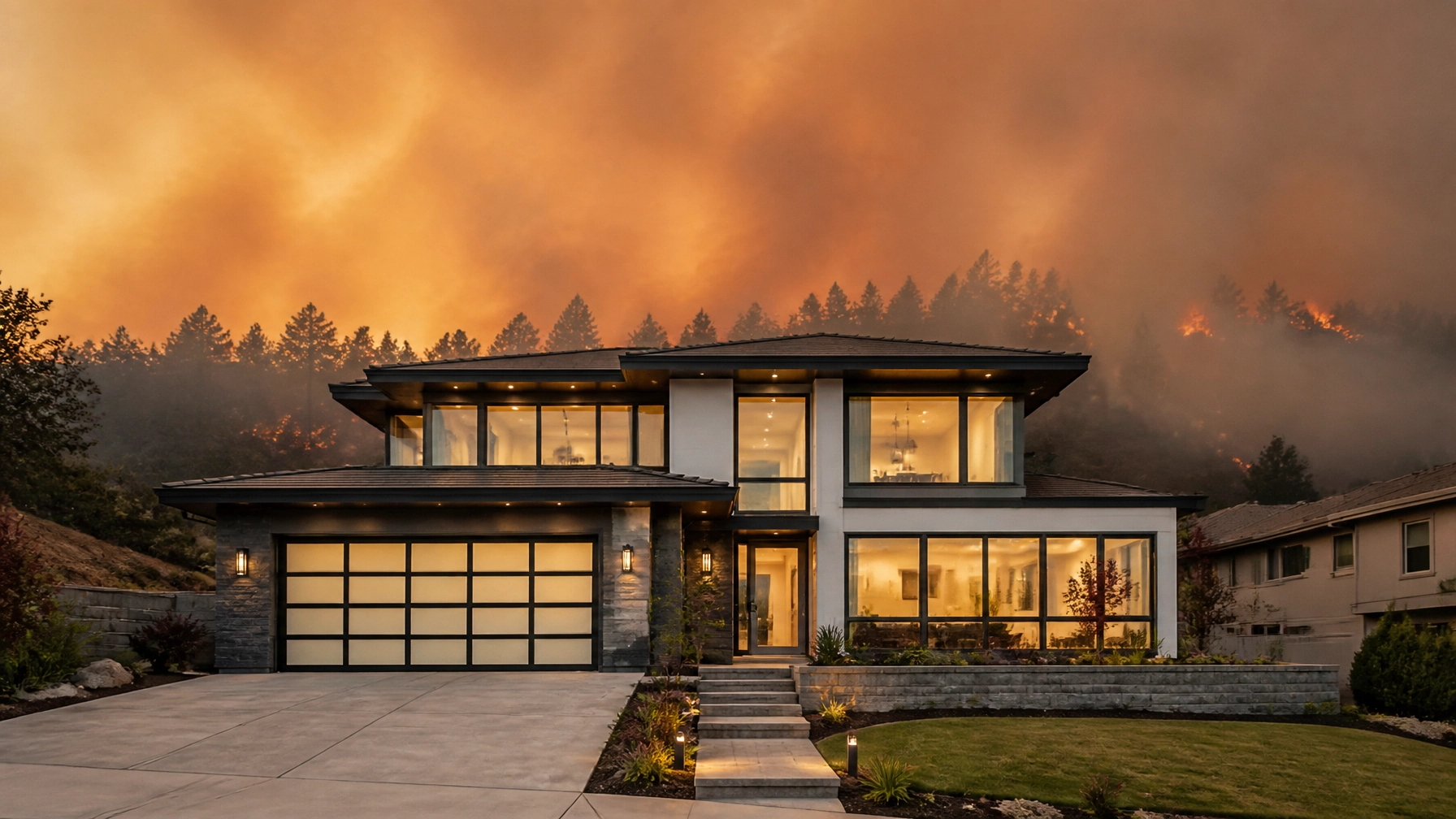
Closing your windows is only half the battle because most buildings "breathe" through thousands of tiny, invisible cracks in the walls, roof, and foundation. When the air outside is thick with smoke, the natural pressure differences in your home act like a vacuum, pulling those contaminants inside. Without professional intervention, the air you are breathing indoors can quickly become nearly as toxic as the air outside. Building science consulting identifies these weak points and fixes the "vacuum effect" before the smoke rolls in.
Most people think of their home as a sealed box, but it’s actually more like a sieve. Even with windows shut tight, the "stack effect": where warm air rises and escapes through the top of the building: creates a low-pressure zone at the bottom. This sucks in outdoor air through every available gap. If that air is filled with wildfire smoke, you’re basically inviting PM2.5 (tiny, lung-damaging particles) to take up residence in your living room.
How does PM2.5 infiltration work in a standard building?
In a typical building without optimized seals or high-grade filtration, approximately 70% to 80% of outdoor particulate matter will find its way inside. This happens because standard construction isn't airtight, and most residential HVAC filters are designed to protect the equipment, not your lungs. Once these particles are inside, they can linger for days, settling into carpets and furniture or staying suspended in the air you breathe.
PM2.5 particles are less than 2.5 micrometers in diameter: about 30 times smaller than a human hair. They are small enough to bypass your body’s natural defenses and go straight into your bloodstream. When we perform indoor air quality testing, we often find that indoor levels are dangerously close to outdoor levels during wildfire events, unless the building has been specifically engineered for air tightness.

What is the "Building Science" approach to filtration?
A professional building science approach replaces basic "dust filters" with high-efficiency MERV 13 or MERV 16 filters that capture the microscopic particles found in smoke. We also integrate activated carbon layers to neutralize the toxic gases and "burnt" odors that standard filters completely ignore. This dual-action strategy ensures that both the physical particles and the chemical contaminants are removed from your breathing zone.
Not all filters are created equal. A standard "MERV 8" filter (the kind you buy at a big-box store) is great for catching dog hair and giant dust bunnies, but it’s basically a screen door to wildfire smoke.
- MERV 13 filters catch about 50% to 75% of those tiny smoke particles.
- MERV 16 filters go even further, catching over 95%, which is about as close to a clean-room environment as you can get in a standard home.
- Activated Carbon is the secret weapon for the smell. It uses a process called adsorption to trap Volatile Organic Compounds (VOCs) and gases that a physical filter can't touch.

Why does building pressure management matter for smoke?
Building pressure management is the art of making sure your home or office is "pushing back" against the smoke by maintaining slight positive pressure. By carefully balancing the amount of air coming in versus the air going out, a consultant ensures that any air leaking through cracks is filtered air moving outward, rather than smoke moving inward. This essentially creates an invisible shield around your building that prevents unfiltered air from ever entering.
Think of it like a pressurized airplane cabin. If the pressure inside is slightly higher than the pressure outside, the air wants to blow out of any holes, not suck in. Our environmental testing services include checking your HVAC balance to ensure that when the sky turns orange, your building is actively defending itself. Without this balance, even the best filters in the world can be bypassed as smoke gets pulled in through electrical outlets, recessed lighting, and door frames.
How can indoor air quality testing give you peace of mind?
Professional air quality testing provides the hard data you need to know that your protection measures are actually working. Instead of guessing based on how your nose feels, we use laboratory-grade sensors to measure exact particle counts and chemical levels inside your space. This scientific approach turns "I hope we're safe" into "I know we're safe," which is the ultimate goal of any building science intervention.
Wildfire smoke is a health hazard, but it shouldn't be a source of constant anxiety. By understanding the mechanics of how smoke enters and how to stop it, you can take control of your environment. Whether you are a homeowner, a property manager, or a business owner, having a clear, unbiased report on your air quality is the first step toward a healthier, safer season.

Ready to breathe easier?
Don't wait for the next smoke advisory to find out if your building is protected. Our team of Certified Industrial Hygienists and building science experts is here to help you create a fortress of clean air.
- Get a professional assessment.
- Upgrade your filtration systems.
- Ensure your home is truly safe.
Contact Built Environments Canada today for a free 15-minute consultation!
Key Takeaways
- Filters aren't enough: Standard filters (MERV 8) won't stop smoke; you need MERV 13 or 16 and activated carbon for total protection.
- Pressure is key: Maintaining positive building pressure acts as an invisible shield, preventing smoke from leaking in through hidden cracks.
- Data over guesswork: Professional testing can confirm if your indoor air is actually safe or if smoke is bypassing your defenses.
- Huge results: Building science can reduce smoke infiltration from a staggering 80% down to less than 5%.
- Proactive beats reactive: Setting up these systems before wildfire season starts ensures you aren't scrambling when the air quality drops.