TL;DR: Wildfire smoke requires specialized filtration like MERV 13 or HEPA because standard filters often let the smallest, most harmful particles through. A combination of a high-efficiency furnace filter and portable room cleaners is the most effective way to keep your indoor air safe during smoke events.
What is the difference between MERV 8 and MERV 13 for smoke?
MERV 13 filters are significantly better at capturing the fine particles found in wildfire smoke than MERV 8 filters. While MERV 8 is great for common household dust and lint, it lacks the density to stop sub-micron particles like PM2.5. To protect your lungs during wildfire season, upgrading to a MERV 13 filter in your HVAC system is a necessary first step.
The MERV (Minimum Efficiency Reporting Value) scale measures how well a filter catches particles of different sizes. Most standard homes come equipped with a MERV 8 filter. This is fine for catching pet dander or carpet fibers, but it is effectively "transparent" to wildfire smoke. Research shows that MERV 8 filters capture almost zero particles in the 0.3 to 1.0-micron range, which is exactly where most smoke resides. Switching to MERV 13 can reduce indoor particle counts by up to 95%, providing a massive safety boost for your family.
Why is HEPA the gold standard for wildfire PM2.5?
HEPA filters are the highest level of particle filtration, designed to trap 99.97% of particles as small as 0.3 microns. This makes them incredibly effective at removing PM2.5, the tiny soot and ash particles in wildfire smoke that can enter your bloodstream. Because most home HVAC systems cannot handle the thickness of a HEPA filter, they are best used in portable air purifiers for individual rooms.
Wildfire smoke is a complex mix of gases and fine particulate matter (PM2.5). These particles are so small that they bypass your body's natural defenses and lodge deep in your lungs. HEPA (High-Efficiency Particulate Air) filters use a dense mat of randomly arranged fibers to catch these tiny invaders. If you are serious about indoor air quality, having a HEPA purifier in the bedroom ensures you are breathing the cleanest possible air while you sleep.

What is the best "hybrid" setup for home air protection?
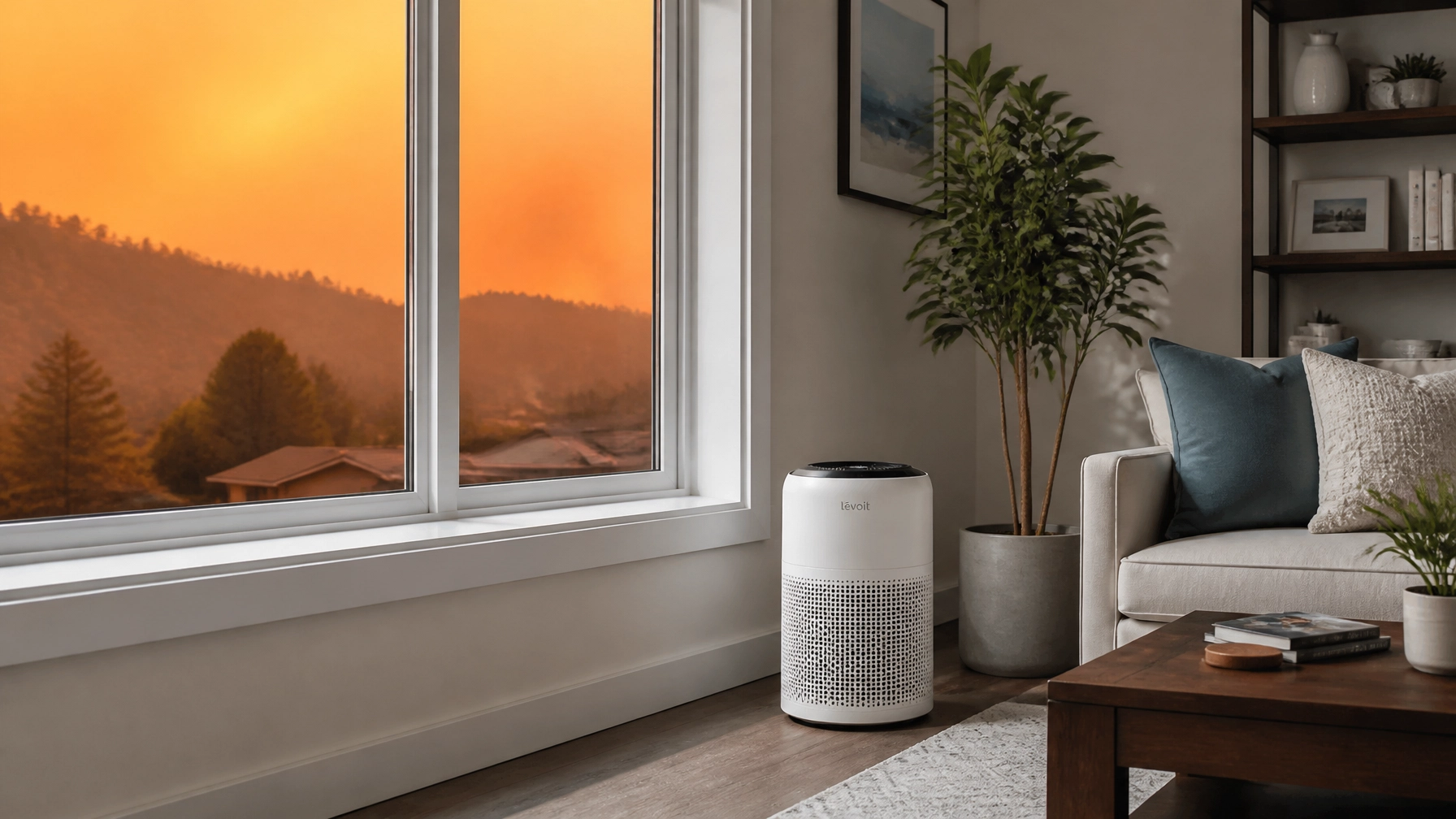
The most effective strategy is to use a MERV 13 filter in your furnace alongside portable HEPA purifiers in high-traffic areas. This "Hybrid" approach uses your central HVAC system to scrub the air throughout the whole house while the HEPA units provide an extra layer of protection in bedrooms and living rooms. This setup ensures that even if smoke leaks in through gaps in windows or doors, it is quickly removed.
At Built Environments Canada, we often see that homeowners rely too much on one single solution. However, building science consulting teaches us that homes are leaky systems. A hybrid approach compensates for these leaks. Make sure your HVAC fan is set to "On" rather than "Auto" during heavy smoke events to keep air moving through that MERV 13 filter constantly.
Can a DIY box fan filter really protect my family?
Yes, a DIY "Corsi-Rosenthal Box" can be just as effective as expensive commercial air purifiers at a fraction of the cost. By taping four MERV 13 filters to a standard 20-inch box fan, you create a high-volume air cleaner that can move massive amounts of air. This is a great budget-friendly option for large open spaces or for people who need immediate protection during a sudden smoke event.
The secret to the Corsi-Rosenthal box is its surface area. Because it uses four large filters, it doesn't struggle with airflow as much as a single-filter setup. This allows the fan to move more air, resulting in a higher Clean Air Delivery Rate (CADR). For under $150, you can build a unit that outperforms many $500 commercial HEPA purifiers in terms of raw air volume.

Why should you choose mechanical over electret filters?
Mechanical filters maintain their efficiency as they get dirty, whereas "charged" electret filters can lose their effectiveness quickly when exposed to heavy smoke. While many cheap high-MERV filters use an electrostatic charge to attract particles, that charge can be neutralized by the oily components of wildfire smoke. For long-lasting protection, look for filters that rely on physical density (mechanical) rather than just a temporary charge.
When you are in the middle of a two-week smoke event, you don't want your filter's performance to drop on day three. Many "electret" filters carry a high MERV rating when brand new but drop significantly as smoke particles "blind" the electrostatic fibers. If you can find deep-pleat mechanical filters, they are generally a more reliable choice for sustained wildfire seasons.
How do I know if my air filters are actually working?
The only way to be 100% sure your filtration setup is working is through technical indoor air quality (IAQ) testing. A professional assessment can measure the exact levels of PM2.5 in different rooms of your house to identify where smoke is leaking in. This scientific approach takes the guesswork out of your health and ensures your investment in filters is actually delivering results.
At Built Environments Canada, our Indoor Air Quality testing uses professional-grade monitors to track airborne contaminants in real-time. We don't just guess; we provide clear, unbiased reporting on your home's air health. If you are noticing a persistent smoke smell or experiencing respiratory irritation, a quick assessment can help you pinpoint the problem: whether it's a failing filter or a hidden air leak in your building's envelope.

Get a Free Consultation
Don't leave your family's health to chance this wildfire season. If you're concerned about your indoor air quality or want to know if your filtration setup is up to the task, we can help. Contact us today for a free 15-minute initial consultation with a Certified Industrial Hygienist.
Key Takeaways:
- Upgrade to MERV 13: Standard MERV 8 filters are not dense enough to catch fine wildfire smoke.
- Use the Hybrid Method: Combine a high-efficiency HVAC filter with portable HEPA units for maximum safety.
- Consider a DIY Box: A Corsi-Rosenthal box is a powerful, low-cost way to clean large volumes of air.
- Watch Filter Types: Mechanical filters are often more durable than electret (charged) filters during heavy smoke.
- Test to Be Sure: Professional IAQ assessments provide the data you need to confirm your home is truly safe.