TL;DR: Biophilic design uses natural elements like living walls and active biofilters to significantly reduce indoor pollutants like VOCs and particulate matter. Integrating these systems with professional building science consulting ensures your air stays clean while creating a more productive, natural environment.
Biophilic design is more than just adding a few desk plants to your office. It is a strategic approach to building science that integrates natural materials, daylight, and living systems into our indoor spaces. When done correctly, this "nature-first" mindset doesn't just look good, it actively scrubs the air of harmful contaminants. By combining biological filtration with modern HVAC systems, we can create buildings that breathe as well as they function.
Can plants really clean my indoor air?
Passive plants help, but they are rarely enough to clean a whole room on their own. While common houseplants can absorb small amounts of toxins, a single potted ivy won't offset the off-gassing from new carpets or high-occupancy CO2 levels. To see real results, you need a high density of plants or an "active" system that forces air through the root zones. Passive greenery is great for mental health, but for true air purification, we look toward biophilic engineering.
What is an "active" botanical biofilter?
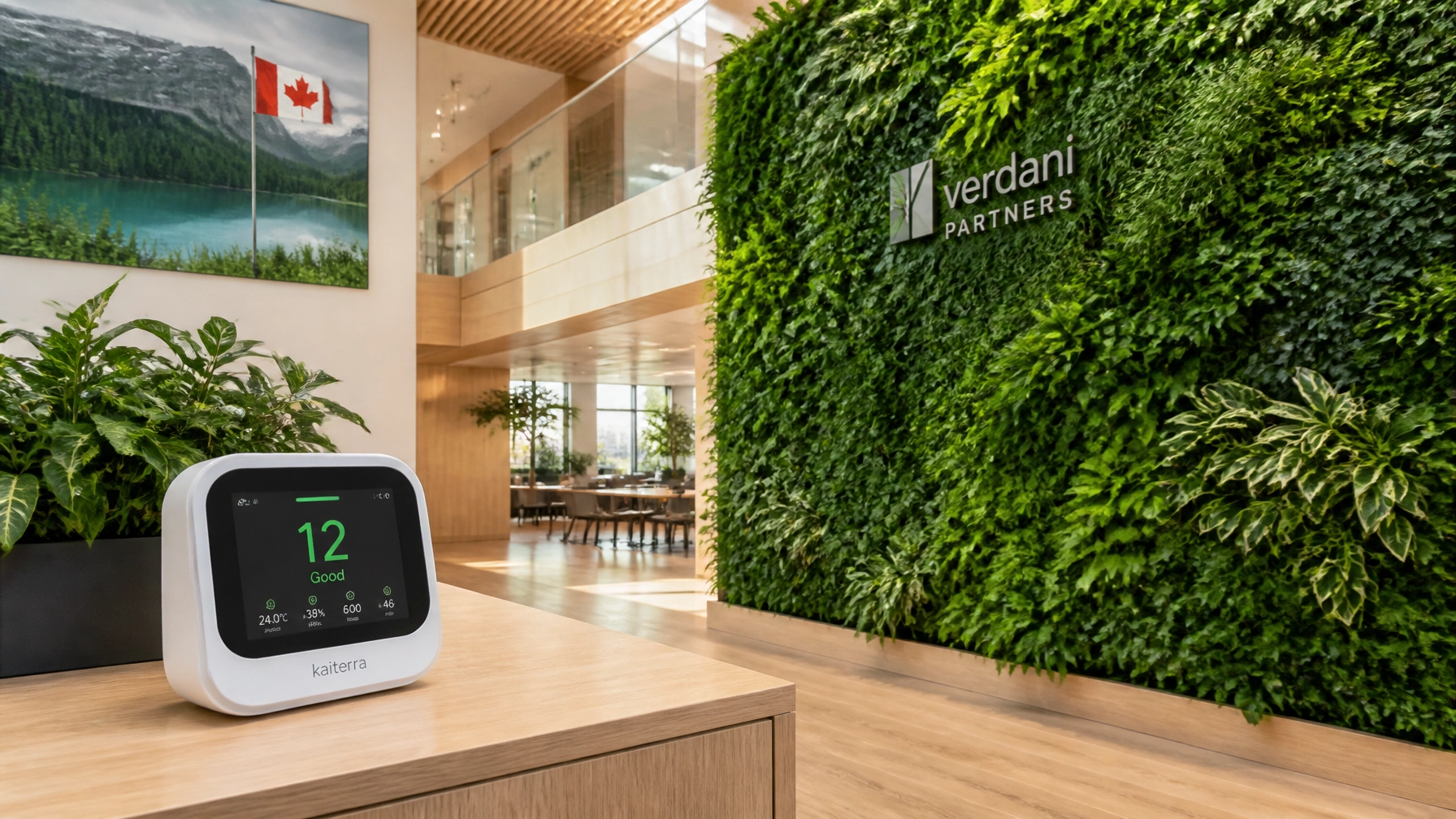
Active biofilters are living walls integrated directly into a building's mechanical ventilation system. Unlike a standard decorative plant wall, an active biofilter (like the one in the Edmonton Federal Building) pulls air through the plants' roots and a specialized growing medium. This allows beneficial microbes in the soil to "eat" pollutants like volatile organic compounds (VOCs). These systems turn a beautiful wall into a high-performance piece of environmental testing services infrastructure.

How does biophilic design reduce VOCs and PM2.5?
Research shows that active biophilic systems can reduce VOCs by up to 65% and fine dust (PM2.5) by as much as 35%. Biophilic engineering relies on "phytoremediation," where plants and their associated microorganisms break down chemical vapors from furniture, paints, and cleaning supplies. Living walls also act as natural humidifiers and dust traps. This is especially useful in workplace air quality testing scenarios where occupants complain of "stuffy" air or "sick building syndrome."
Why is biophilia important for Canadian buildings?
In Canada, we spend up to 90% of our time indoors, especially during the long, cold winter months. Our buildings are often sealed tight to save energy, which can lead to a buildup of indoor pollutants and stagnant air. Integrating biophilic design, such as the trees and soil cells used in the Bank of Canada HQ in Ottawa, brings the benefits of the outdoors inside when it’s too cold to open a window. It helps manage humidity and provides a much-needed connection to nature during the dark winter season.

Do I still need indoor air quality testing?
Yes, because you cannot manage what you do not measure. Even the best living wall cannot detect a hidden mould problem or high radon levels without proper sensors. Indoor air quality testing acts as the "audit" for your biophilic systems, ensuring that your living walls are performing as expected. We recommend testing your air before and after installing biophilic features to quantify the reduction in pollutants and ensure your environment is truly healthy.
How do I start integrating biophilia?
Start by prioritizing low-VOC materials and high-impact greenery. If you are planning a renovation, choose natural materials like wood, stone, or cork that don't off-gas harmful chemicals. Consider installing a living wall in high-traffic areas or atria where air circulation is highest. For complex commercial projects, consulting with a building science expert can help you integrate these systems into your existing HVAC setup for maximum efficiency.

Get a Quote
Are you looking to improve the health and performance of your building? Whether you're planning a biophilic renovation or need to verify your current air quality, our team of Certified Industrial Hygienists is here to help.
Book your free 15-minute consultation today.
Key Takeaways
- Active vs. Passive: Active living walls that pull air through root systems are significantly more effective at cleaning air than standard potted plants.
- Quantifiable Results: Well-designed biophilic systems can reduce VOCs by 40-65% and CO2 by 14-25%.
- Source Control: Always use low-VOC materials alongside biophilic design to prevent air quality issues before they start.
- Testing is Essential: Use professional environmental testing services to ensure your biophilic features are actually delivering cleaner air.