TL;DR: Renovating older buildings requires identifying hidden risks like asbestos, lead, and mould before any walls are knocked down. Skipping a professional hazardous material survey can lead to expensive cleanups, health risks, and legal issues that stall your project.
Starting a renovation is exciting. You’ve got the mood boards ready, the contractor hired, and the budget set. But behind those walls or under that old flooring, there might be a “house-warming” gift you didn’t ask for: hazardous materials. If you aren’t careful, what started as a simple kitchen update can turn into a high-stakes environmental cleanup.
At Built Environments Canada, we see these mistakes happen all the time. The good news? They are completely avoidable. By understanding the common pitfalls, you can keep your family safe and your project on track.
Is your building safe just because it looks modern?
The “looks can be deceiving” rule is the most important thing to remember before starting a project. Even if your home has modern paint and updated fixtures, the underlying structure could still contain hazardous materials if the building was constructed before 1990. Many materials used in the mid-to-late 20th century, like drywall compound, floor tiles, and insulation, often contain asbestos. You cannot determine if a material is hazardous just by looking at it; only laboratory testing can give you a definitive answer.
It is a common misconception that asbestos was only used in “very old” houses from the early 1900s. In reality, asbestos was widely used in Canadian construction until the late 1980s. Even some materials sold into the early 90s contained these fibers. Before you pull up a single floor tile or cut into a wall, you need a professional hazardous material survey.
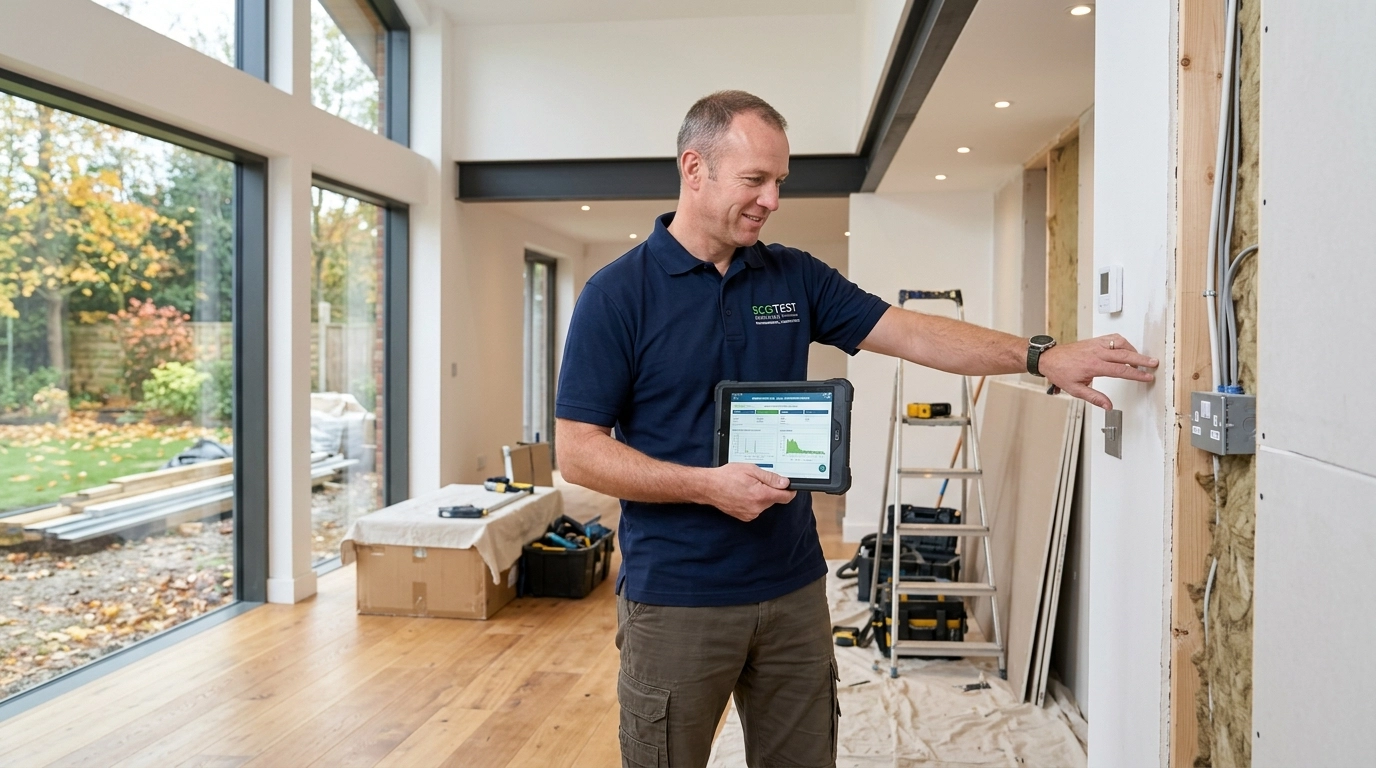
Think of this survey as a physical for your house. Our team comes in, identifies potential risks, and takes small samples for testing. This step ensures that your “modern” renovation doesn’t accidentally release legacy toxins into your living space.

Why should you avoid DIY sampling and disturbing materials?
Taking your own samples for asbestos testing or lead paint can be dangerous and often leads to inaccurate results. When you scrape a popcorn ceiling or chip away at old paint without the right gear, you release microscopic fibers and dust directly into your breathing zone. Professionals use specific wetting techniques and specialized tools to ensure that taking a sample doesn’t create a larger contamination problem. Furthermore, a professional knows exactly where to sample to get a representative result, whereas a DIYer might miss the “hot” spot.
Asbestos testing isn’t just about the lab result; it’s about the process. Asbestos fibers are incredibly small: about 1,200 times thinner than a human hair. When disturbed, they stay airborne for hours or even days. If you’re curious about what these look like under a microscope, they are sharp, needle-like structures that can lodge deep in the lungs.

If you suspect lead-based paint, the risks are just as high. Lead dust is particularly harmful to children and pregnant women. We’ve covered this in detail in our guide on how lead paint testing ensures a safe renovation. Letting a pro handle the sampling protects your health and gives you peace of mind that the data is accurate.
Why is poor dust containment a major renovation risk?
Using a standard household vacuum or failing to seal off the work area can spread hazardous dust throughout your entire home. Regular shop vacs or home vacuums often lack the high-efficiency particulate air (HEPA) filters required to trap tiny hazardous particles, meaning they just suck up the dust and blow it out the back. A professional setup involves “negative air” pressure and physical plastic barriers to keep the dust contained within the work zone. This prevents contaminants from settling on your furniture, carpets, and inside your HVAC system.
Many homeowners think a simple plastic sheet and a piece of tape are enough. However, air is lazy; it will find the easiest path out of a room. Without proper seals and specialized equipment like HEPA air scrubbers, those microscopic fibers will travel.

If you are hiring a contractor, ask them about their containment plan. Do they use HEPA vacuums? How do they prevent cross-contamination? If their answer is “we just open a window,” you might want to reconsider. Proper containment is a hallmark of a professional who takes your safety seriously.
What are the consequences of illegal hazardous waste disposal?
Disposing of asbestos, lead, or mould-contaminated materials in regular trash is illegal and carries heavy fines. Hazardous waste requires specific bagging (usually double-bagging in 6-mil poly bags) and must be taken to a designated facility that is licensed to handle such materials. Improper disposal doesn’t just hurt the environment; it puts waste management workers at risk and can lead to massive liability for the homeowner or contractor.
Regulations across Canada are strict regarding “cradle-to-grave” responsibility for hazardous waste. This means that as the property owner, you are responsible for where that waste ends up. If a contractor gets caught dumping asbestos in a regular landfill or a back alley, the trail leads back to you. Always ask for disposal manifests or receipts to prove that your renovation debris was handled correctly. It’s a small bit of paperwork that saves you from a massive legal headache.
Why shouldn’t you ignore the source of moisture during mould remediation?
Cleaning up visible mould without fixing the underlying water leak or humidity issue ensures the mould will return. Mould is a symptom of a moisture problem, such as a leaky pipe, poor attic ventilation, or a foundation crack. If you simply replace the drywall without addressing why it got wet in the first place, you are just throwing money away on a temporary fix. A successful renovation involves identifying the “root cause” of the moisture and fixing it before the new finishes go in.

At Built Environments Canada, we don’t just tell you there is mould; we help you understand why it’s there. Using tools like moisture meters and thermal imaging, we can find hidden leaks behind walls that aren’t visible to the naked eye. Addressing these issues during the renovation phase is significantly cheaper than having to tear everything out again six months later. You can find more details on moisture and building health in our FAQ section.
Why is a final clearance test necessary after hazardous material removal?
A final clearance test provides scientific proof that the work area is safe for you and your family to re-enter. This involves air sampling or visual inspections conducted by a third-party consultant after the abatement work is finished but before the containment barriers are removed. It is the only way to verify that the air is free of hazardous fibers or dust and that the cleanup was actually successful.
Many people skip this step to save a few hundred dollars, but it is the most critical part of the process. Think of it as an insurance policy for your health. If a contractor missed a spot or their containment failed, a clearance test will catch it. We provide unbiased, clear reporting that gives you the green light to move back in with total confidence.

Get a Quote
Don’t gamble with your health during your next renovation. Whether you need a pre-construction hazardous material survey or indoor air quality testing, our team of Certified Industrial Hygienists is here to help. We offer fast turnarounds and clear, unbiased reporting to give you peace of mind.
Contact Built Environments Canada today for a free 15-minute consultation.
Key Takeaways
- Test Before You Touch: Always assume pre-1990 buildings contain asbestos or lead until a survey proves otherwise.
- Pro Sampling Only: Never DIY sample hazardous materials; the risk of self-contamination is too high.
- Containment is King: Ensure your contractor uses HEPA filtration and proper barriers to keep dust out of your living areas.
- Fix the Source: For mould issues, you must identify and repair the moisture source, or the problem will come back.
- Verify Safety: Never consider an abatement job “done” until a third-party clearance test confirms the air is safe.